
THE SONG THAT MADE THE BEE GEES IMMORTAL — BEFORE THE WORLD EVER SAW THE WHITE SUITS
Introduction
BEFORE THE WORLD DANCED TO THE BEE GEES, “MASSACHUSETTS” MADE MILLIONS STOP AND LISTEN

On September 19, 1967, the Bee Gees released a song that would quietly transform their future. There was no driving dance rhythm, no soaring falsetto, and none of the glittering imagery that would later become associated with their worldwide success. Instead, “Massachusetts” arrived as a gentle, melancholy recording built around a memorable melody, restrained instrumentation, and the unmistakable voices of three young brothers who were still discovering how far their music could travel. Within weeks, the song had reached the top of the British chart, giving Barry, Robin, and Maurice Gibb their first UK Number One and establishing them as far more than promising newcomers.
The song’s official title was originally presented as “(The Lights Went Out in) Massachusetts,” a phrase that immediately created an atmosphere of distance, mystery, and longing. It did not tell its story through complicated details. Instead, it offered a feeling that almost anyone could understand: the need to return somewhere meaningful after traveling too far from home. Robin Gibb’s lead vocal sounded fragile yet certain, as though the singer were carrying both regret and hope within the same breath. Behind him, the brothers’ harmonies added warmth without overwhelming the loneliness at the center of the song.
What makes the recording even more remarkable is that the Gibb brothers had not built it from personal experience of the American state itself. According to the Bee Gees’ official account, they wrote the song while aboard a boat in New York Harbor, setting themselves the challenge of creating something that might be suitable for The Seekers, whose warm vocal style they admired. They never succeeded in presenting it to the group, so the Bee Gees recorded the composition themselves. That decision became one of the most important turning points of their early career.

There is an appealing innocence in the idea of three young songwriters choosing Massachusetts largely because the name suited the melody and emotional atmosphere they were creating. They did not need to provide a detailed geographical portrait. In the song, Massachusetts becomes less a particular destination than a symbol of belonging. It represents the place one remembers when the wider world begins to feel unfamiliar, the light one hopes is still burning after a long absence, and the possibility that returning home might restore something that has been lost.
That universal meaning helped the recording cross national boundaries with extraordinary ease. It became the Bee Gees’ first of five UK Number One singles, remaining at the top for four weeks during a seventeen-week chart run. The success was not confined to Britain; the song reached audiences across Europe and other international markets, and historical accounts have commonly credited it with worldwide sales exceeding five million copies. Precise sales figures from the physical-record era can differ between sources, but there is no doubt that “Massachusetts” became one of the Bee Gees’ defining international successes of the 1960s.
For listeners who know the brothers mainly through “Stayin’ Alive,” “Night Fever,” or “How Deep Is Your Love,” returning to “Massachusetts” can feel like discovering an entirely different group. The voices are recognizable, but the musical world is quieter and more reflective. There is no attempt to fill every available space. The arrangement leaves room around Robin’s voice, allowing each phrase to linger before the harmonies gently carry it forward. The result is not dramatic in an obvious way, yet it possesses a sadness that becomes more affecting with repeated listening.
This quality belonged to much of the Bee Gees’ early work. Before their later reinvention, the brothers had already developed an exceptional ability to write songs about isolation, memory, uncertainty, and emotional distance. Their melodies could be immediately accessible while their lyrics suggested something darker beneath the surface. “Massachusetts” is a perfect example of that balance. It sounds beautiful enough to comfort the listener, but the story never entirely resolves the sadness that brought the singer home.
Robin’s performance remains central to the song’s identity. His voice possessed a natural tremble that could make even a simple line sound deeply personal. He did not sing as though he were trying to display technical perfection. He sang as if the words had arrived from somewhere beyond ordinary conversation. Barry and Maurice supported him with the close family harmonies that would become one of the most recognizable sounds in popular music. Their voices did not merely accompany the lead; they seemed to surround it, suggesting that loneliness could be held safely within the bond between brothers.
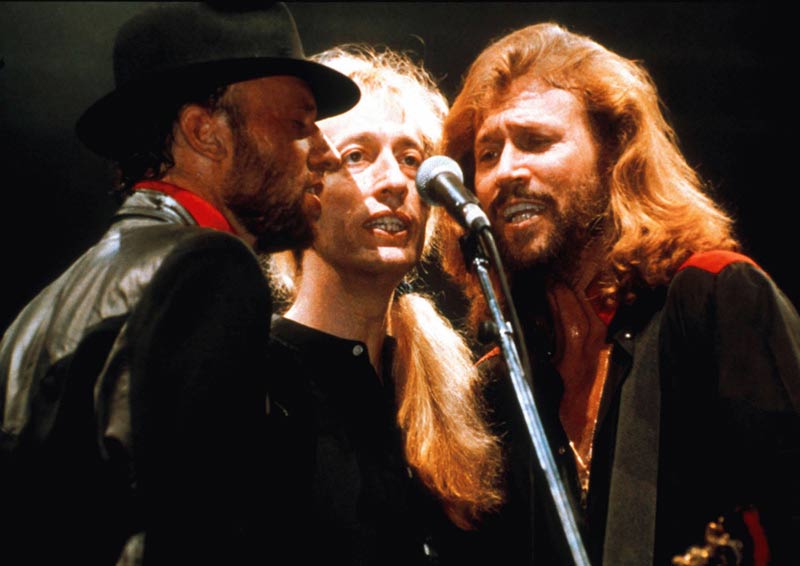
That family connection gives the recording greater poignancy today. Maurice Gibb died in 2003, and Robin Gibb died in 2012, leaving Barry as the surviving member of the trio. When the original recording plays now, all three brothers are young again, standing together before the triumphs, disagreements, separations, reunions, and losses that would shape the decades ahead. An old record has the extraordinary ability to preserve people beyond time. The needle falls, the voices enter, and for a few minutes the complete Bee Gees exist together once more.
Older listeners may remember when the song first appeared on the radio, sounding unlike much of the louder and more rebellious music surrounding it in 1967. They may remember purchasing the single, hearing it at home, or watching the Bee Gees during the early period when their future still seemed unwritten. The song can therefore carry two kinds of longing at once: the homesickness described within the lyrics and the listener’s own desire to revisit an earlier period of life.
Younger audiences may hear it differently. For them, “Massachusetts” offers evidence that the Bee Gees cannot be understood through one musical era. The brothers did not suddenly become gifted songwriters when disco reached its commercial height. Long before the white suits and illuminated dance floors, they were already creating melodies of remarkable emotional clarity. Their later success was not an accidental transformation but another chapter in a career built upon years of disciplined writing and instinctive harmony.
The song also demonstrates how little a timeless recording sometimes needs. There are no elaborate effects competing for attention and no lengthy instrumental passages designed to impress. The strength lies in a memorable tune, a vulnerable voice, and a feeling expressed with restraint. That simplicity helps explain why the recording has aged so gracefully. Production fashions may change, but the desire to return home—whether to a place, a person, or a vanished moment—remains part of human experience.
When the Bee Gees released “Massachusetts,” they could not have known the astonishing changes that awaited them. They would survive shifts in musical fashion, periods of rejection, renewed international success, and the burden of being identified almost completely with one enormously popular era. They would write hits for themselves and for other major performers, becoming one of the most successful songwriting families in modern music. Yet this quiet 1967 single already contained the essential qualities that would sustain them: melodic imagination, emotional directness, and a harmony possible only between voices that had grown up together.
“Massachusetts” did more than give the Bee Gees their first British Number One. It introduced millions of listeners to the emotional world of the Gibb brothers. It proved that they could turn an imagined destination into a universal symbol and make homesickness sound almost beautiful. More than half a century later, the recording still feels sincere because it never tries too hard to declare its importance.
The world would eventually dance to the Bee Gees, celebrate their falsettos, and crown them as defining figures of another musical decade. But before all of that, three brothers sang about lights going out in a place they had never visited—and somehow made millions of people feel that they were searching for home too.